Fear the Subscription!

Third time’s the charm?


I’m still painting miniatures, albeit is a slow and almost painful process. I don’t know how some people find the time or inspiration to churn out entire armies of these things in just a couple of weeks, as it takes me about as long to finish one model.
One big reason could be that I can’t decide on a single color scheme. I managed to finish a significant chunk of Space Marines a couple of years ago, but since then I decided to go with a marine sub-group called the Space Wolves. Basically they’re like Vikings. In space. And all of last year was spent painting up a pretty significant force, at least enough to play a small quick game. Unfortunately, afterward I got pretty tired of it. The colors didn’t really do it for me anymore, and I couldn’t get behind the idea of repeating it for every subsequent model.
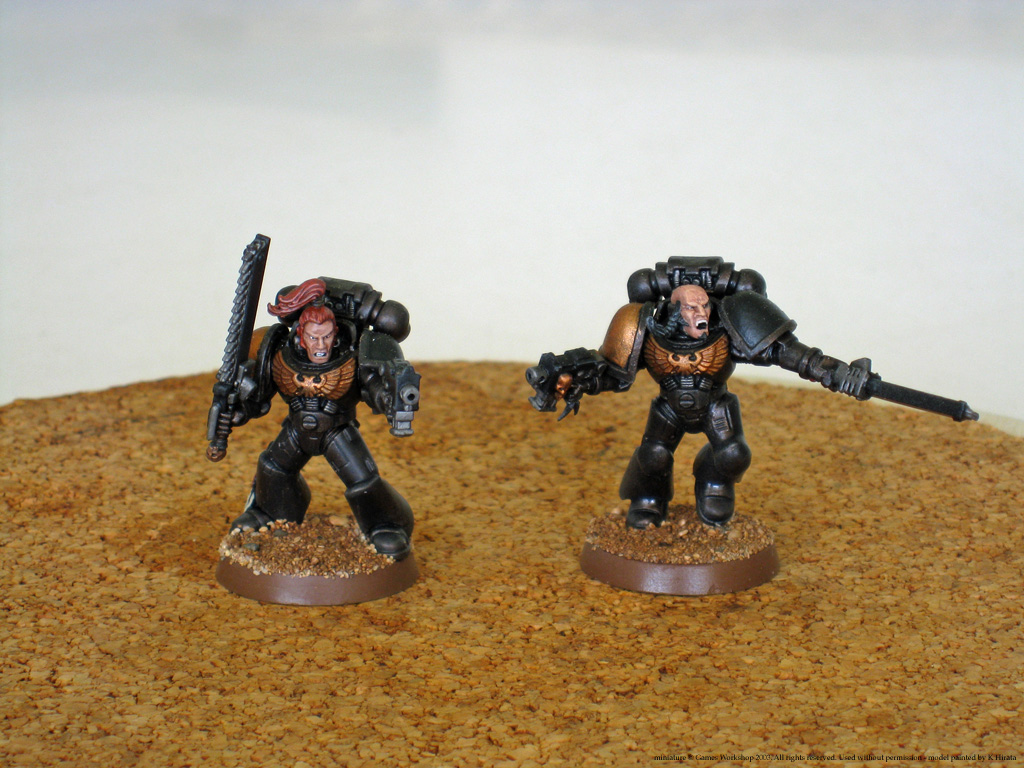
Space Wolves attempt #1
I started with a black basecoat and used a Games Workshop color called Tin Bitz (a dark metallic brown) followed by a heavy black ink wash. Once that dried I highlighted edges with a dry brushing of silver. The details were painted in a brass with gold edge. I chose these colors because I didn’t like painting the typical Space Wolf scheme, and wanted something darker. I also figured the metallic shoulder pads and icons would differentiate between standard units and elite specialists, using silver and gold as skill levels went higher.
Later I found myself disliking this scheme more and more, not only because it took a long time for the ink wash to dry, but because everything seemed too dark. The models seem to fade to black and I was left with nothing but a face and shoulder. I thought maybe I could do better with a similar “dark” atmosphere, but different color.
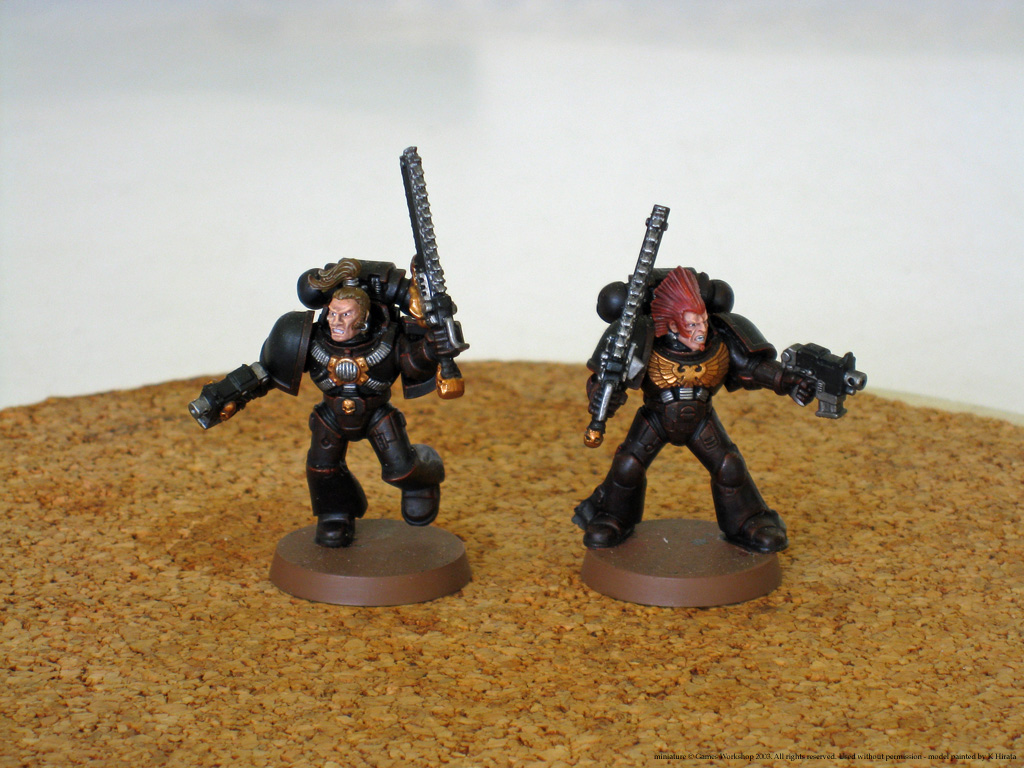
Space Wolves attempt #2
Yeah, that’s supposed to be a dark red. Obviously at first or second glance there isn’t much of a difference. And that’s how I began to feel after finishing them, basically the same as before, and like before I couldn’t see myself doing it forever.
So I went with a color that I knew I could get behind.
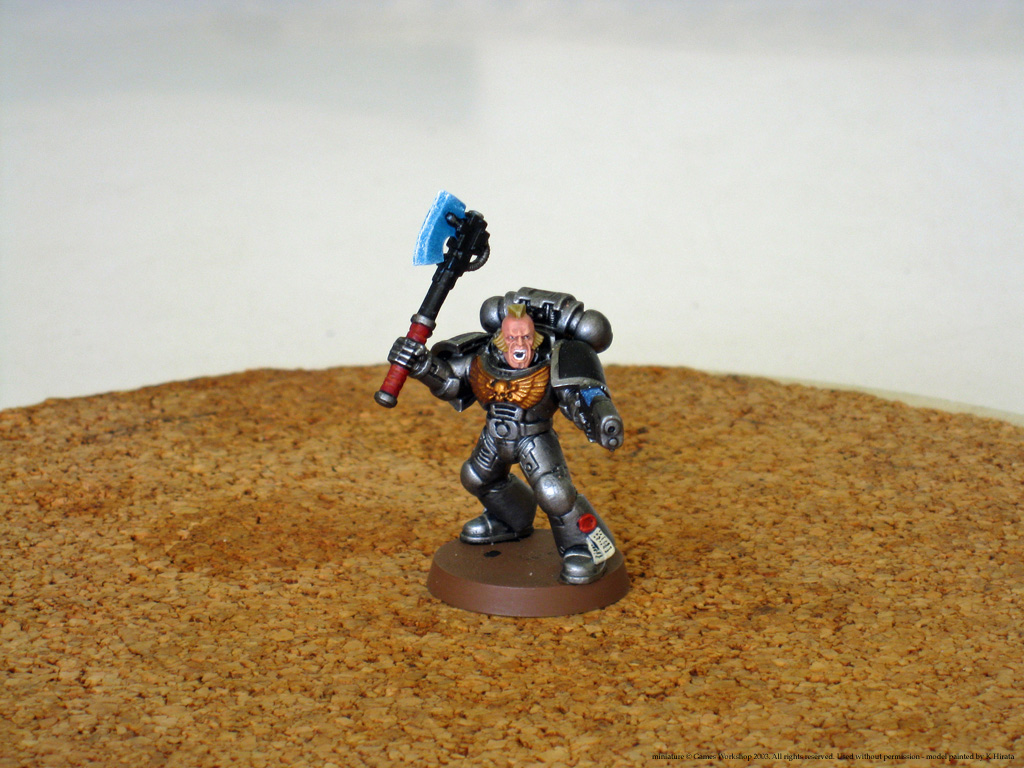
Space Wolves attempt #3
The armor is painted with a basecoat of metal, washed in black ink and highlighted with silver. The details are brass highlighted with gold. For the axe, I started with a basecoat of a dark blue followed by a layer of turquoise. I drybrushed a light blue over most of the blade to get a speckled pattern, concentrating more of it near the edge. Finally another drybrush of white focused along the hard edges.
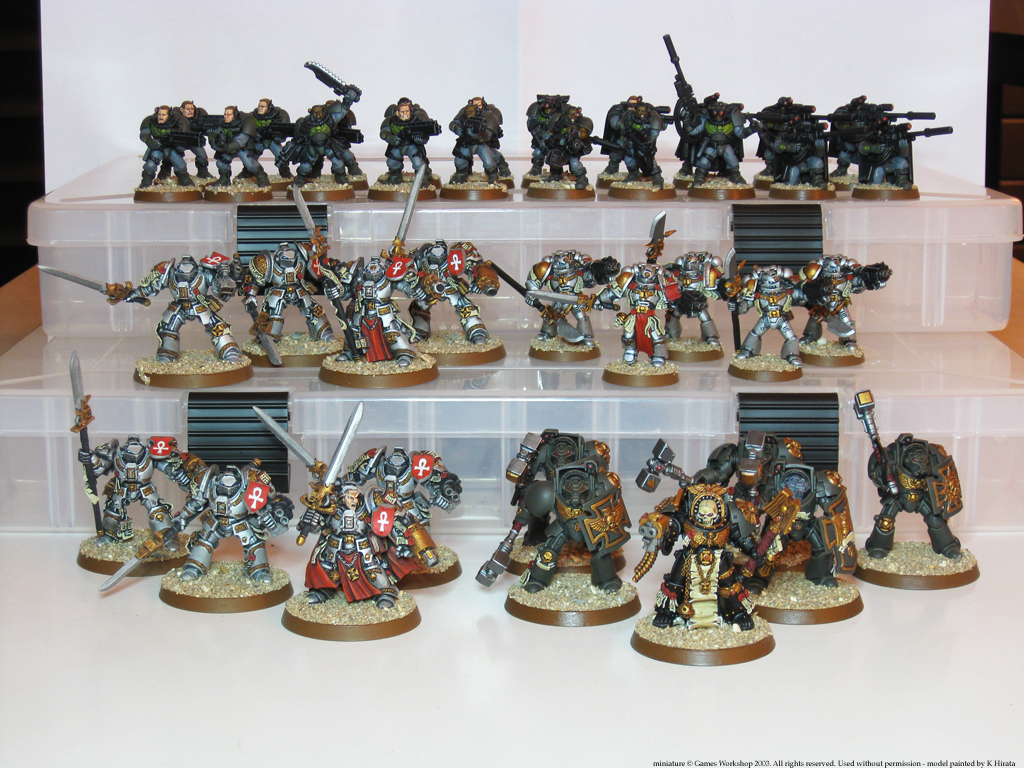
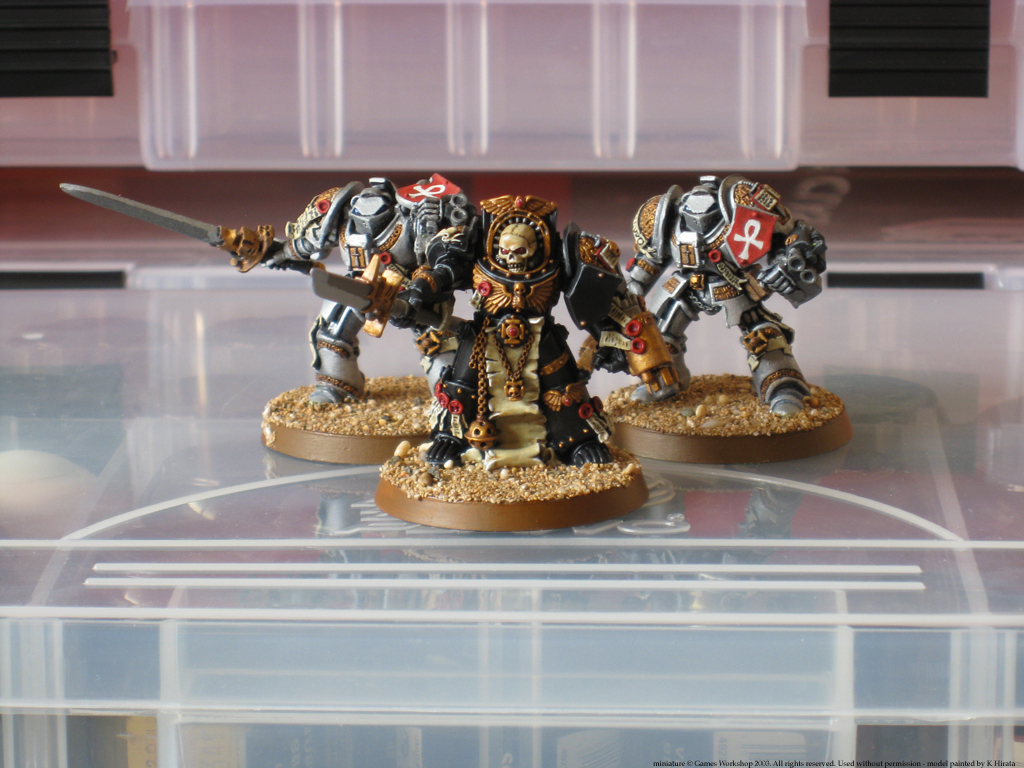
This new scheme is very similar to the Grey Knights already in my collection, and for me that’s a good thing. It’s a really easy process to paint, and put all together it makes for a striking army on the table. As needs warrant, I can pull some of the older Grey Knight models and use them as proxies in a Space Wolf army, or vice versa.
The new development really spurred me forward, and I whipped out a couple more figures that had greater detail, just to see how they would turn out.
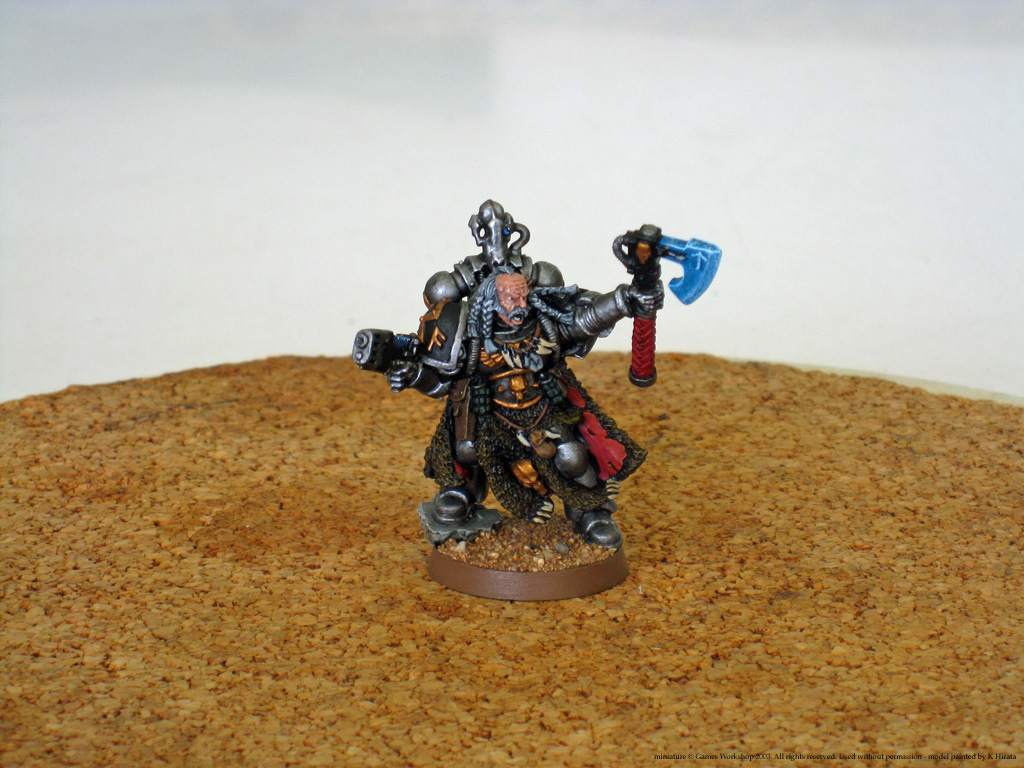
Space Wolves Rune Priest front
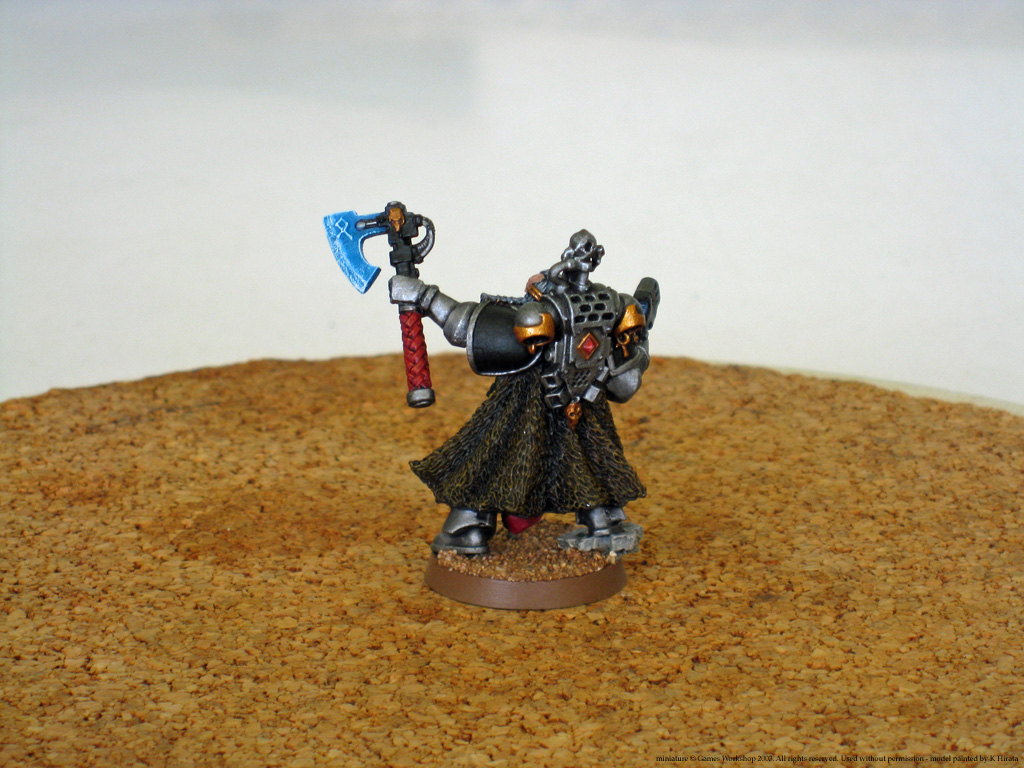
Space Wolves Rune Priest back
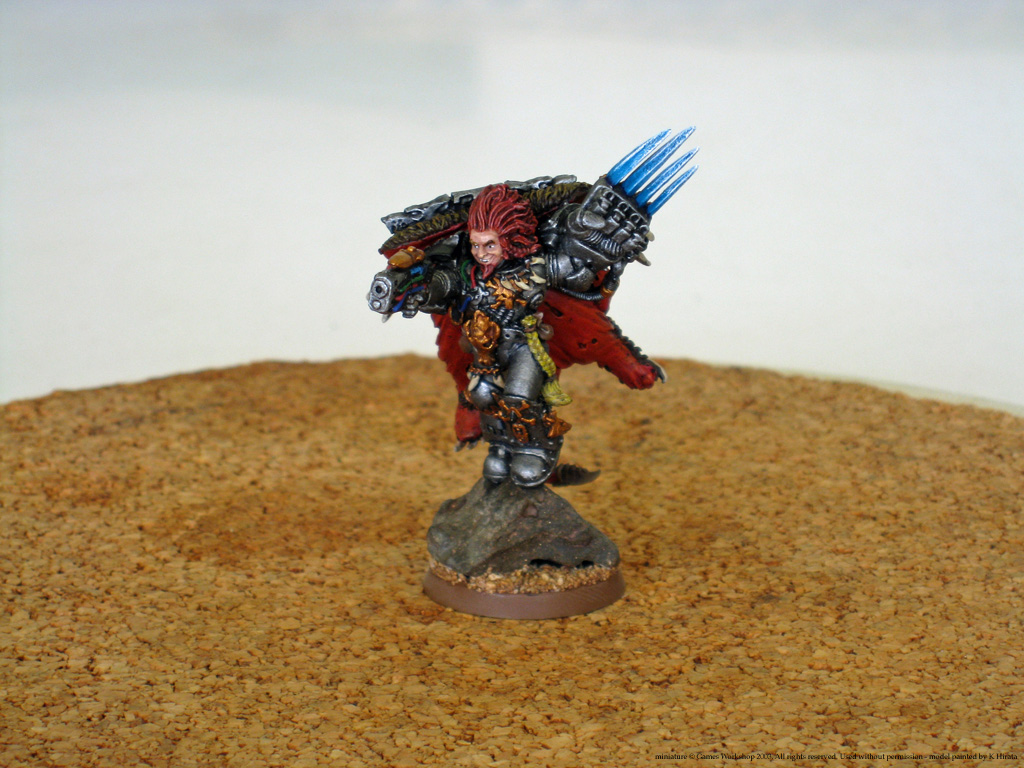
Space Wolves Lukas the Trickster front
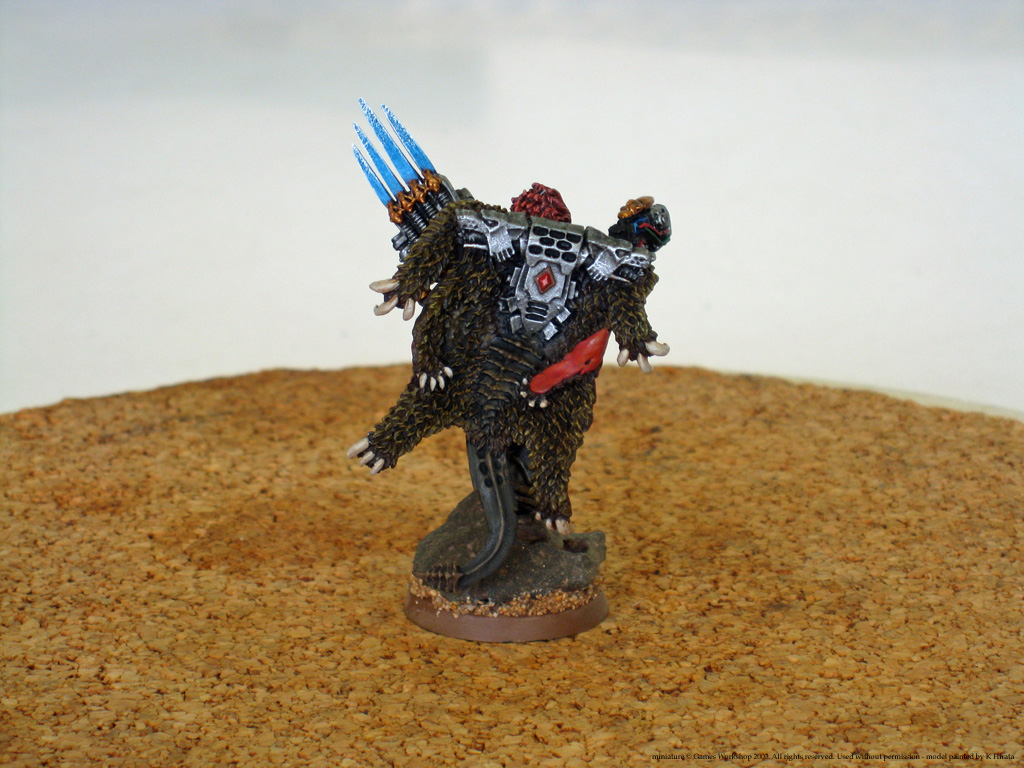
Space Wolves Lukas the Trickster back
I really like how the weapons turned out. In game terms, these blades are supposed to be surrounded by an electric-like power field, enabling them to easily cut through armor. Since Space Wolves originate from a predominately cold-weather planet I decided to try and make their power weapons look more like ice. Plus I have a hard time trying to paint lightning on these things.
I plan to enter the last figure in an upcoming Games Day event later this month. I don’t expect to place very high, but sometimes it’s good to establish goals beyond personal significance.
Speaking of goals, I’ve given myself a new project, one to pursue simultaneously with the Space Wolves. I hope to build an Imperial Guard army, using colors similar to SWAT teams.
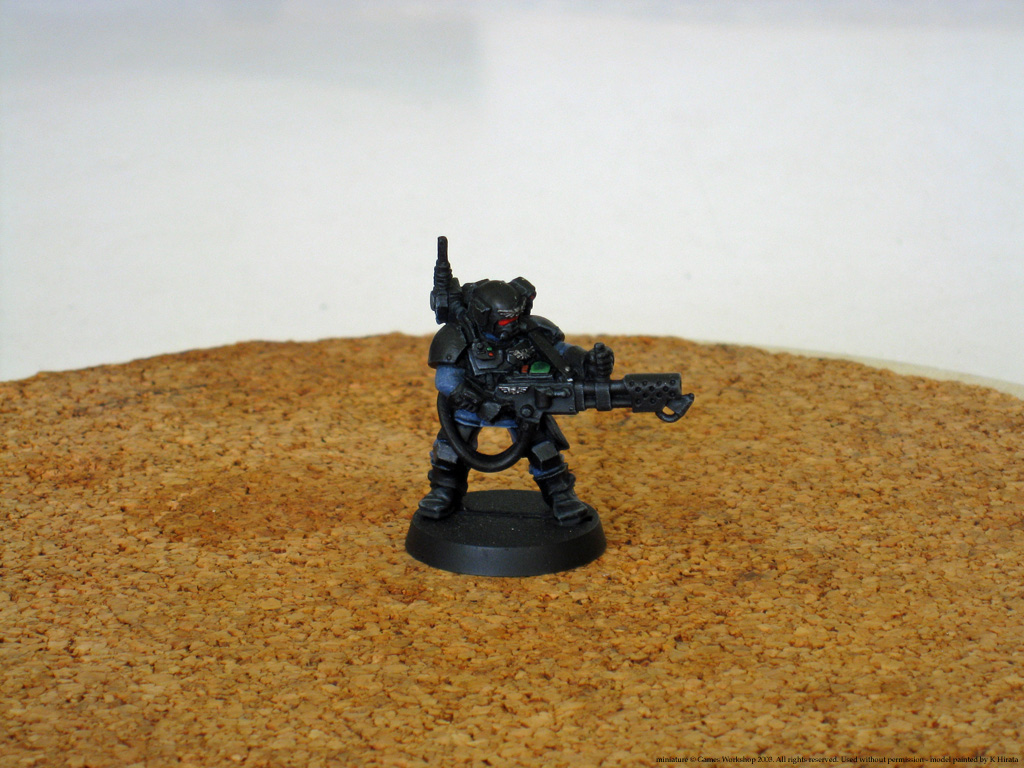
Imperial Guard Kasrkin front
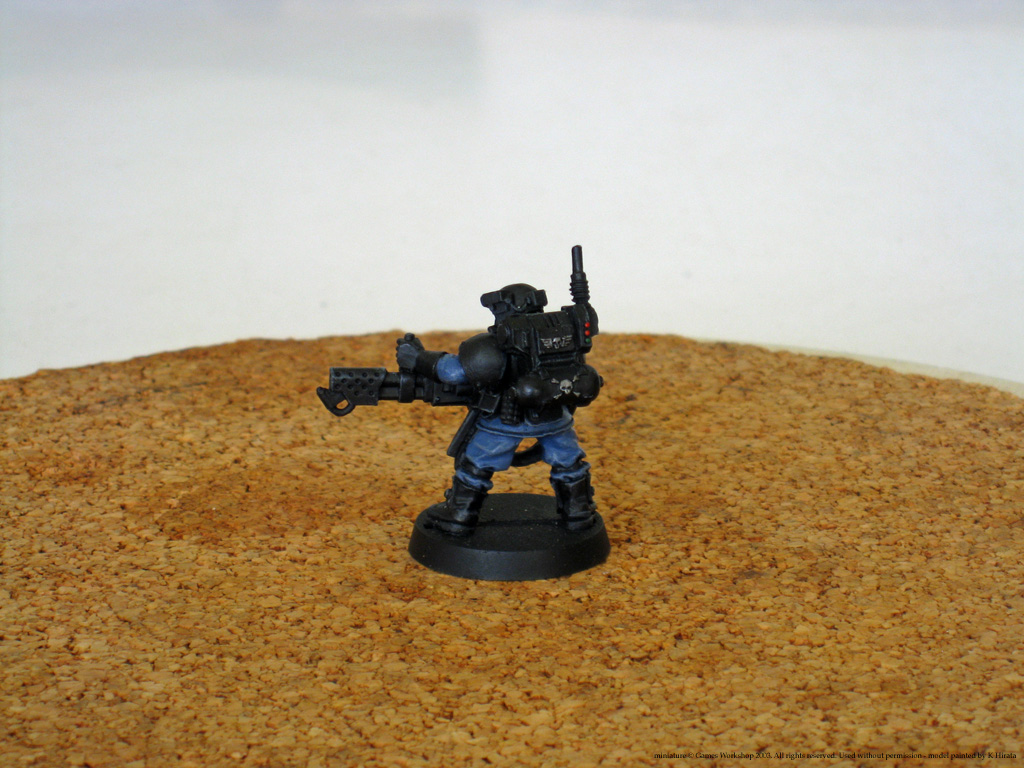
Imperial Guard Kasrkin back
I’ll admit that the color scheme here is also very dark, almost to the point where you can’t pick out much detail. However, I’ve limited the black to gloves and armor, and Imperial Guard models don’t wear much except for specialists like the one above. The majority of the rank-and-file have a greater fatigues to armor ratio, so the blue-grey scheme should stand out more.
We’ll see if I need three more chances to finally settle on a “standard” silver and gold scheme.