Fear the Subscription!

Family Branding


A few years ago, I expressed an interest in figuring out what my family’s kamon was, or even if we had one. My paternal grandmother has three kimono in her possession, each given as a memento. Two were very formal kurotomesode (picture) from her mother and her mother-in-law, worn by each at her wedding. At the time, she told me this was the kamon of her mother-in-law:
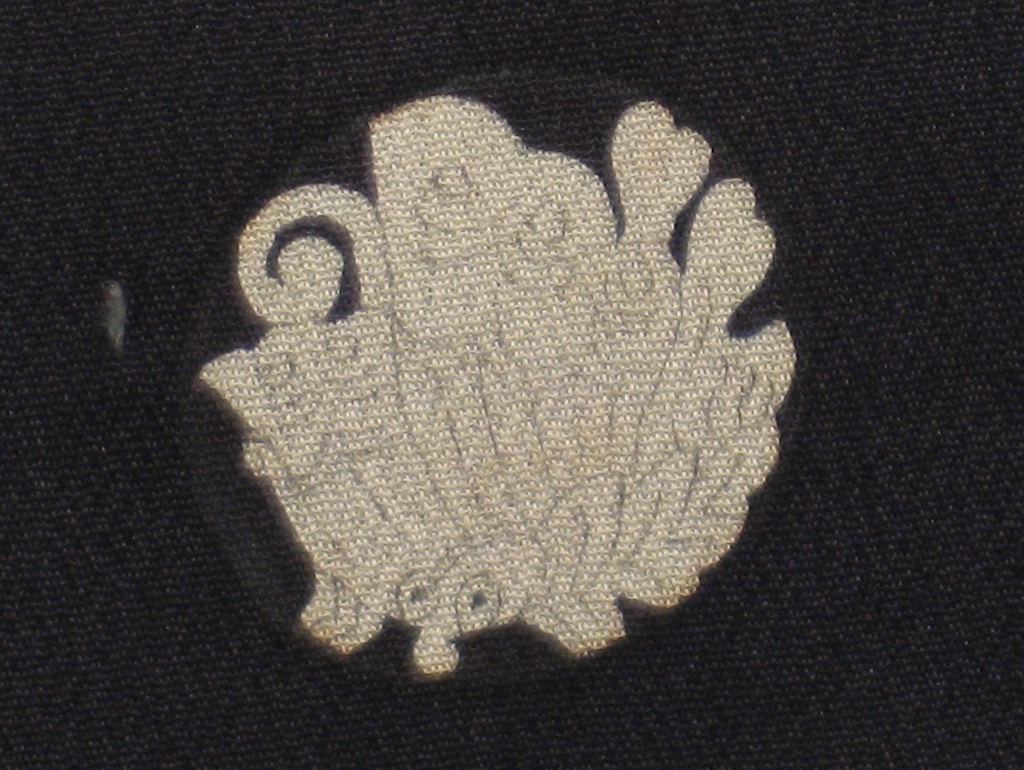
Chou
I figured this must be the crest of my grandfather, since it came from his side. However, my grandmother can no longer remember which kimono was whose, so there is a chance she mixed the two up. Maybe it was this crest, from the other kimono?
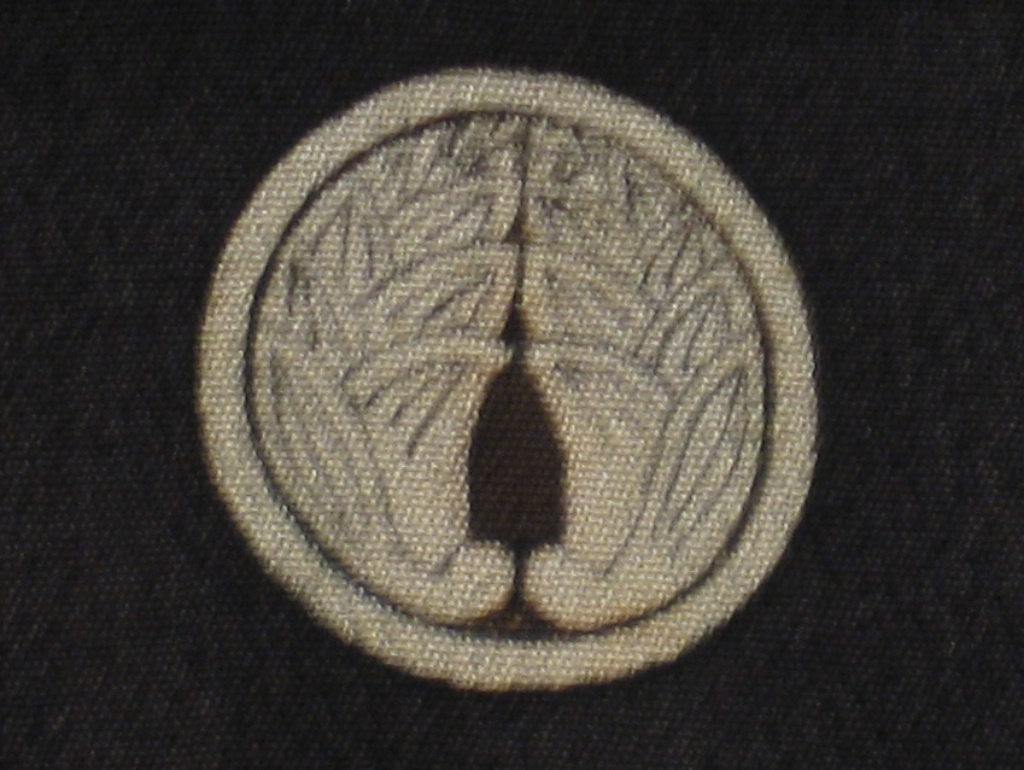
Myouga
The point might be moot, though. I learned later (through a source I can no longer remember) that women were not obligated to wear their husband’s crest on their formal kimono, so I cannot state definitively whether or not my inherited crest is the butterfly, or the ginger, or neither.
For reasons unknown, I put off the search for other pursuits, and when I resumed it recently I went back to my grandmother, who showed me the third kimono, a gift to my uncle (my dad’s brother) for boys’ day. Since it was a formal kimono with five kamon on the sleeves, chest and back, I felt that perhaps this one was the true crest of my family:
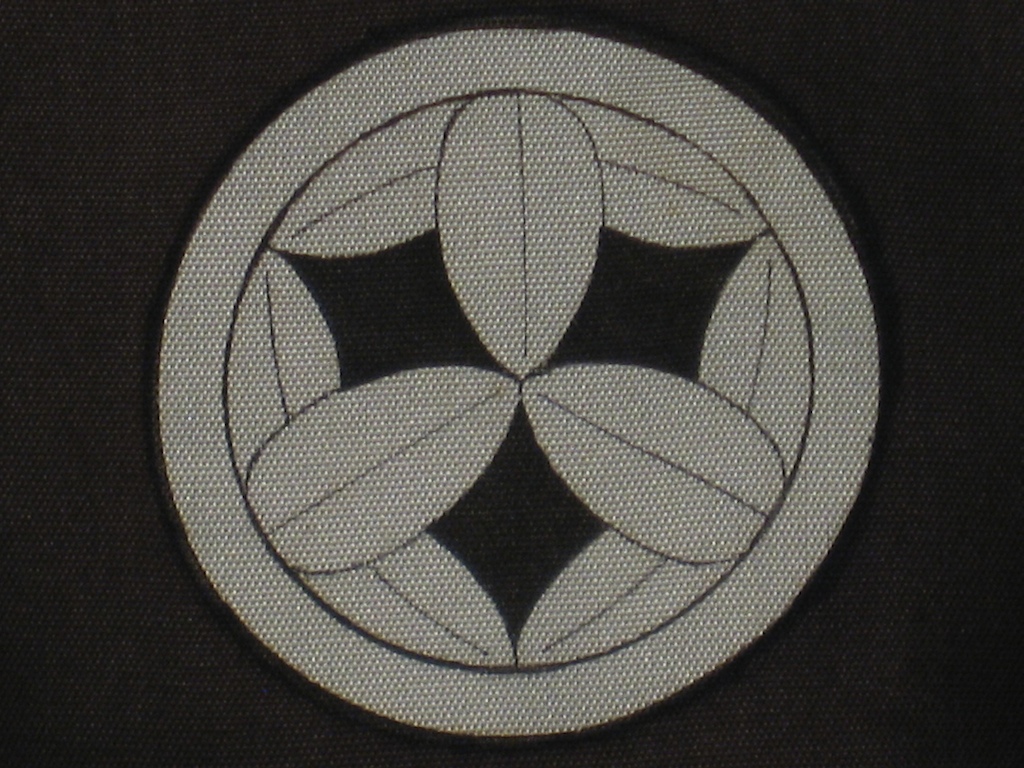
Sasa
The kimono even had protective paper over the crests, perhaps indicating a custom-make. However, from everything I’ve been able to glean about kimono, kamon, and my family, there is a very good chance that this kimono was simply purchased as-is, or perhaps already in possession of someone who decided to hand it down to my uncle. Which meant that this crest could potentially be mine, or representative of a completely different family (related or not).
In order to be sure, I hired a local company that offers research into Japanese family crests. I figured if a third-party could confirm or deny my findings, it might be worth it to know for sure. I sent in the required data of family name and region we came from. I even added these pictures of crests as well as the kanji for our family name, as it might help narrow the field.
* * *
One month later, I get the result:
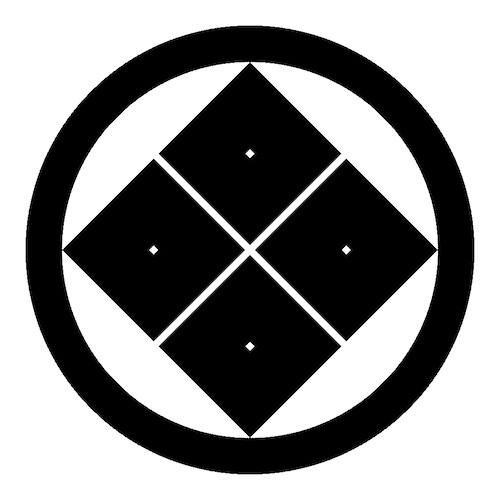
Meyui
For me it was completely from left field. I did not expect a totally different crest, though perhaps I should have, given the rather arbitrary mutability of kamon historically. I wish the researcher who found this crest included some kind of statement, even if it was as simple as “I don’t know whose crests the others are, but this one is actually yours. I found it at Someplace, Somewhere.”
By “arbitrary mutability,” I mean that kamon often underwent small changes as it passed from father to son and beyond, usually an indication of the later generations attempting to establish their own significance. Kamon also held more weight in the past, but with time people kept taking new ones or making them up as they went along. It stands to reason that at some point in my family’s history, someone somewhere picked up this crest. It could have been adopted a very long time ago, or as recently as those that sailed the Pacific to settle here.
I still can’t definitively state that the above is actually my family’s crest. Even though the result comes from a third-party, it’s possible that they just slapped any old design on fancy paper and called it mine. Or they’re completely legitimate and after extensive and thorough research via family temples and graveyards, they have discovered that this is the true kamon of my familial name.
Maybe it doesn’t matter. What does the kamon represent? Is it a link to the past? Does it regale with legends of old, of battles won and lost, of honor and glory found? Is it something I show to people and say, “Hey look, this is my crest, it means awesome?”
If the kamon is a representation of the family, I think what matters more is what I do with it now. Perhaps the true significance of kamon is as a visual symbol of how I lived this life, what values I upheld and what people remember of me. Perhaps the kamon is as much a reminder as it is a symbol, that what I do and how I treat others has consequences. Like the corporate logos of famous brands, people may associate this kamon with my current and future deeds, and that is certainly something worth remembering.